
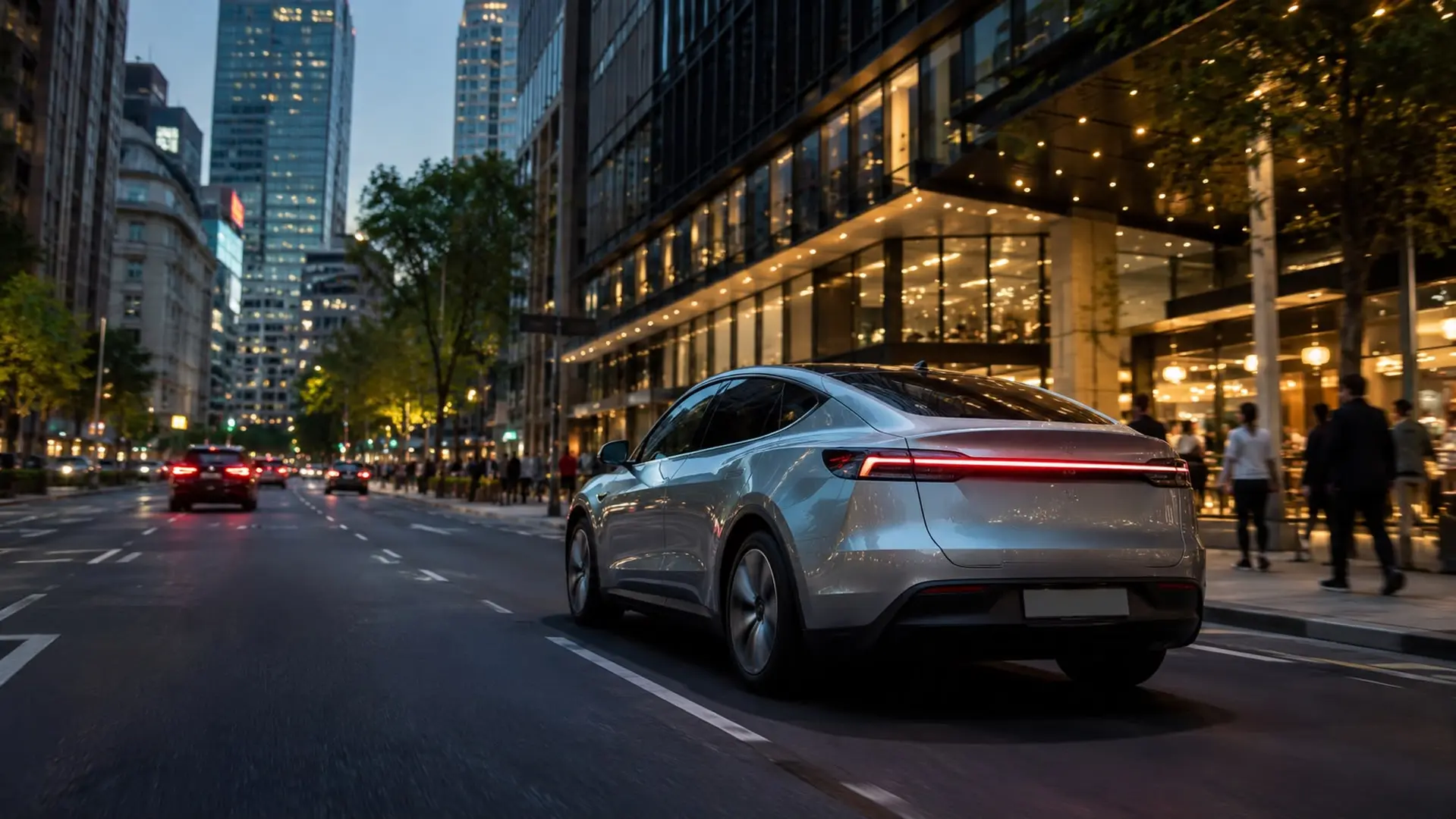
Standardised payment options, transparent pricing and a more extensive charging infrastructure: with AFIR, the European Union aims to make public charging simpler and more reliable. The requirements affect both charge point operators and businesses that provide charging points at their locations. At the same time, EV drivers benefit from clearer and more consistent processes. But which rules already apply, and why is 2027 an important year?
AFIR stands for the Alternative Fuels Infrastructure Regulation. Regulation (EU) 2023/1804 has applied since 13 April 2024 and establishes binding rules for alternative fuels infrastructure throughout Europe. In addition to charging infrastructure for electric vehicles, it covers areas such as hydrogen refuelling stations and the supply of energy to ships and stationary aircraft.
The EU regulation is intended to ensure that adequate, compatible and user-friendly infrastructure is available across all Member States. It replaced the previous Directive 2014/94/EU.
The operational requirements set out in Article 5 generally apply to publicly accessible charging points. Ownership of the land is not the only deciding factor. A charging station in the car park of a supermarket, restaurant or shopping centre may also be considered publicly accessible if it can be used by an unrestricted group of people.
Private wallboxes that are used exclusively by one household or a clearly defined group of people are not subject to the same requirements. The rules are also not limited to charging stations along motorways or major European transport routes. In principle, the EU regulation on charging points also covers publicly accessible locations in cities and municipalities.
The specific obligations that apply to depend on factors including charging power, location and the date on which the charging point became operational. Operators should therefore assess each location individually rather than applying the same approach to every charging point covered by AFIR.
One of the main aims of AFIR is to enable ad hoc charging. EV drivers must be able to charge spontaneously at publicly accessible charging points without registering in advance or entering into a long-term contract with a charge point operator or mobility service provider.
For publicly accessible charging points that have been operational since 13 April 2024, AFIR requires suitable electronic payment options. At charging points with an output of 50 kW or more, operators must provide options such as payment card readers or devices with contactless functionality. At charging points below 50 kW, secure internet-based payment may also be permitted, for example via a QR code linking to a payment page. The transaction must be protected by appropriate security measures.
Apps and charging cards may continue to offer additional benefits. However, they cannot be the only option for ad hoc charging if their use requires registration and a broader contractual agreement.
In addition to payment methods, AFIR also regulates how prices must be displayed. Drivers should be able to see what a charging session will cost before it begins. Prices must be reasonable, transparent, clearly comparable and non-discriminatory.
At publicly accessible charging points with an output of 50 kW or more that have been available since 13 April 2024, the ad hoc price must generally be based on the amount of energy supplied in kilowatt-hours. Operators may also charge a time-based blocking fee to discourage vehicles from remaining at the charging point for longer than necessary. The price must be displayed directly at the charging station, for example on a screen or sticker. Referring users solely to an external website is not sufficient.
At charging points below 50 kW, operators may use different pricing components. However, these must be clearly presented and easy to access before the charging session begins. In this way, the EU rules for charging points improve price comparability across the public charging network.
AFIR includes an important transitional deadline for certain older fast-charging points. From 1 January 2027, publicly accessible charging points with an output of at least 50 kW along the Trans-European Transport Network, known as TEN-T, and at safe and secure parking areas must support the required electronic payment options. This also applies if the charging points were installed before 13 April 2024.
However, this deadline does not mean that every older charging station in the EU must automatically be upgraded by 2027. Location, accessibility and charging power remain decisive factors. Operators should nevertheless review their existing equipment at an early stage. Technical upgrades, new payment solutions and changes to price displays often require sufficient lead time.
AFIR compliance involves more than simply installing a card terminal. A charging point is only AFIR-compliant when all relevant requirements have been met. Depending on the installation, these may include ad hoc charging, suitable payment methods, transparent pricing, digital connectivity and appropriate technical and organisational processes. The reliable provision of location, availability and pricing data is also becoming increasingly important.
For EV drivers, the regulation is gradually creating a more consistent charging experience. Charging stations should become easier to use, prices should be clearer, and spontaneous payment should be possible without a long-term commitment. At the same time, operators and site partners benefit from a clearer framework for investing in charging infrastructure.
At JOLT, we already demonstrate how flexible payment can work in everyday life. At our fast-charging stations with an output of up to 320 kW, you can pay by QR code, JOLT App or credit card, as well as through compatible charging apps and RFID cards.
We also plan, finance and operate urban fast-charging solutions in partnership with businesses and municipalities. In doing so, we support the same development that AFIR is designed to advance: public charging should be fast, transparent and easy to access.
Explore the JOLT charging network today and find the right fast-charging point for your next stop.
You are a journalist and want to reach our team? You want to sign up for press distribution list?
You need our press kit and brand assets? here is everything your might need.