
EV in a Traffic Jam: How Air Conditioning and Stop-and-Go Traffic Affect the Battery
Summer heat, slow-moving traffic and a steadily falling battery indicator can quickly make EV drivers wonder how long their remaining charge will last. Every additional minute can feel stressful, especially on the motorway. The good news is that an EV in a traffic jam generally uses far less energy than many people assume. The main factors are climate control, the outside temperature, the battery level and your driving style.
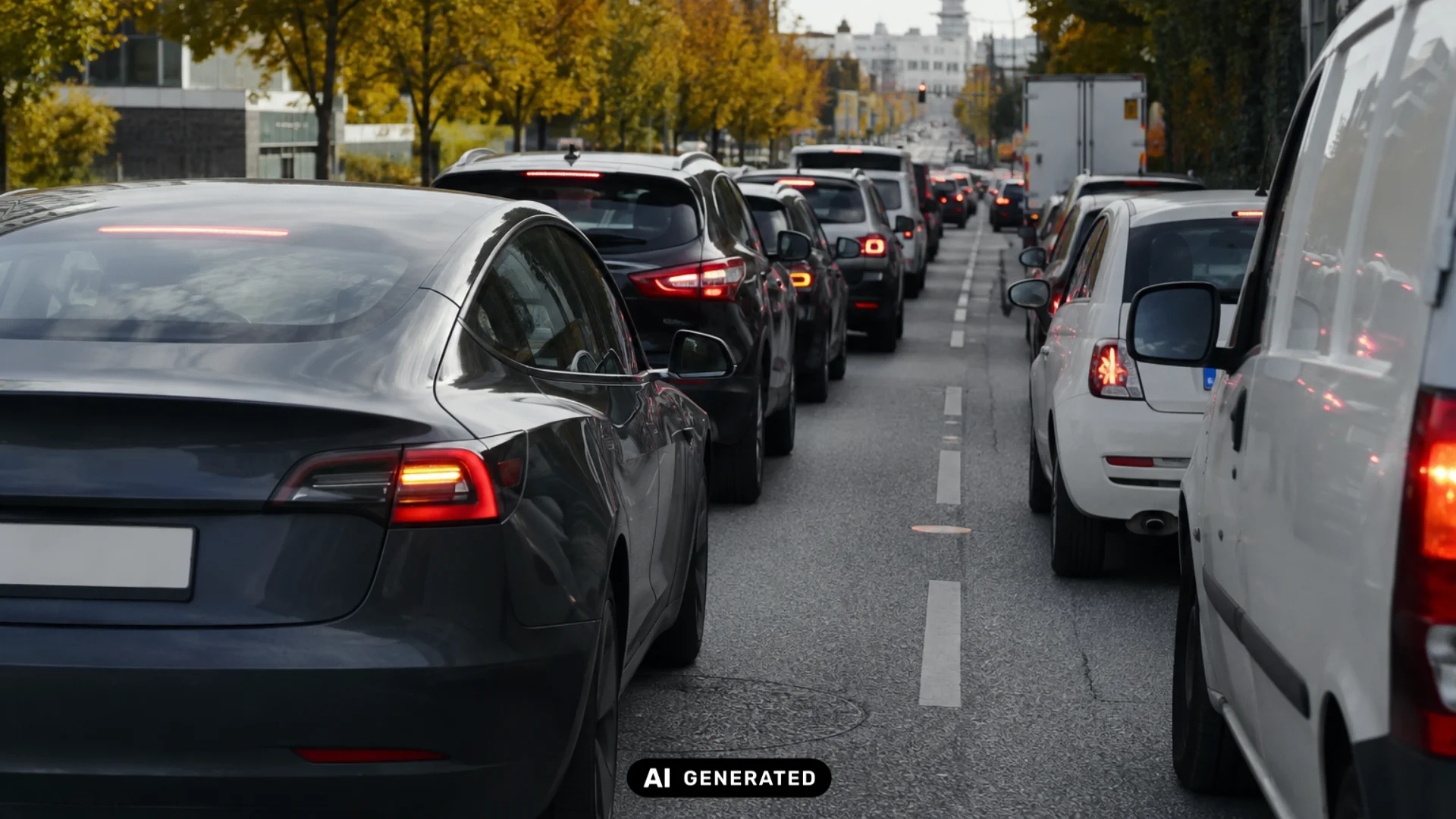
How much energy does an EV use in a traffic jam?
When the vehicle is stationary, the motor uses virtually no energy. Electricity is mainly required for the air conditioning, heating, lights and onboard electronics. Energy consumption therefore depends less on the length of the delay and more on which auxiliary systems are running. In an ADAC test, a Tesla Model Y used around 1.3 to 1.5 kWh per hour at an outside temperature of 35°C, with the air conditioning set to 20°C. This equated to approximately 2% of the battery capacity, or around eight kilometres of range per hour. Actual figures vary depending on the vehicle, temperature and selected cabin settings.
How much battery power does air conditioning use?
The air conditioning draws energy directly from the high-voltage battery. However, an EV stuck in traffic will not necessarily run out of charge quickly. Even after several hours at a standstill, energy consumption usually remains relatively moderate, provided the battery was sufficiently charged beforehand. Keep the doors and windows closed wherever possible to prevent cooled air from escaping. Setting the temperature slightly higher, using Eco mode or activating a driver-only setting can reduce energy demand further.
How does stop-and-go traffic affect consumption and range?
Energy consumption in stop-and-go traffic is not necessarily higher than when driving at speed. At lower speeds, aerodynamic drag is reduced. Regenerative braking also recovers some of the vehicle’s kinetic energy when slowing down. Frequent, forceful acceleration, however, uses additional electricity. Drive smoothly, allow the vehicle to coast and maintain sufficient distance from the vehicle ahead. This helps you avoid unnecessary braking and acceleration while preserving range.
Should you switch off your EV in a traffic jam?
There is usually no need to switch off an EV while waiting in traffic. Keeping the vehicle ready to drive ensures that the climate control, assistance systems and lights continue to operate reliably. It is more effective to reduce unnecessary energy use. In winter, heating generally requires more electricity than cooling in summer. Even so, ADAC tests in very cold conditions showed that EVs with a sufficiently charged battery can remain heated in a traffic jam for many hours. It is still advisable to start longer journeys with a comfortable energy reserve.
What should you do if the battery is running low on the motorway?
If the remaining range becomes low, switch to Eco mode, reduce the climate control setting and head for a charging station as early as possible. Leave the motorway or pull into a service area wherever possible. If there is not enough energy remaining, move onto the hard shoulder or into an emergency refuge area before the vehicle loses power.
Then switch on the hazard warning lights, secure the vehicle and call roadside assistance. All occupants should leave through the passenger side wherever possible and wait behind the safety barrier.
Recharge quickly and conveniently with JOLT
Starting a longer journey with sufficient energy in reserve makes driving more relaxed. At JOLT fast-charging stations, you can quickly recharge your EV in urban areas and gain additional range for the next stage of your journey. This gives you greater peace of mind, even when unexpected congestion causes delays.
Ultra-fast charging
Find a JOLT station near you
Up to 360 kW – in the middle of the city, around the clock.
Find a charging station