
Why Does My EV Charge More Slowly in Winter?
Why Your EV Sometimes Charges More Slowly in Winter When it’s cold outside, fast charging can sometimes look as if the charger isn’t working properly. Especially if you’re used to much higher kW figures and suddenly see less power. The key thing to know is this: The charging speed is a combination of both the […]
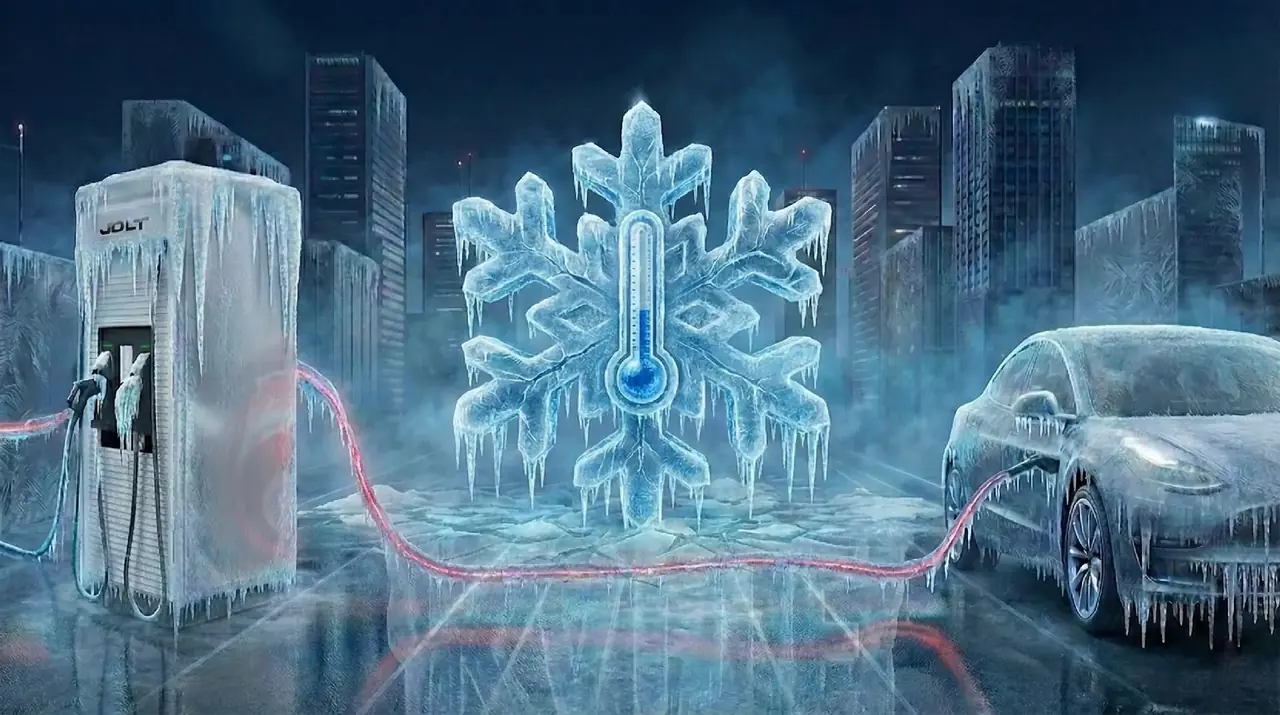
Why your EV sometimes charges more slowly in winter
When it is cold outside, fast charging can sometimes make it seem as though the charging station is not working properly. This is especially true if you are used to much higher kW readings and suddenly get less power. It is important to know that charging speed depends both on the charger's ability to supply power and on the car's ability to accept it. The latter, in particular, suffers in winter because of the cold: the car deliberately charges more slowly to protect the battery and electronics until the battery is warm enough.
How cold affects charging power
An EV battery charges fastest when it operates within its optimal temperature range, ideally around 22 to 25 degrees Celsius. In the cold, the chemical processes in the battery slow down and electrical resistance increases, so the battery cannot absorb energy as quickly as it can in milder temperatures. High charging power would put greater strain on the battery and high-performance electronics, which is why many vehicles automatically reduce charging power in winter. This is not a malfunction but a protective measure preset by the manufacturer. So if you charge your EV in sub-zero temperatures, a lower kW reading at the start of the session is perfectly normal. It often rises only later, once the battery has warmed up.
Why it is especially noticeable in the city
Many drivers notice slower charging most clearly during their daily city trips. The reason is simple: on short journeys, the battery often does not get warm enough. Some models need to be driven for up to an hour in winter before the battery reaches the right temperature for fast charging. This targeted warming is called preconditioning.
If you drive only a few minutes through the city before charging, the battery will usually still be cold on arrival. That's even more likely if the car was previously parked outside. As a result, EV charging can be considerably slower in winter, even though everything is working perfectly.
Tips for charging faster in winter
A few simple steps can often noticeably improve charging power without changing anything at the charger.
- Most vehicles offer features to condition the battery before departure → Check your vehicle settings to see whether you can precondition the battery before setting off
- Most vehicles precondition automatically when a fast charger is set as the destination → Use the car's built-in navigation to guide you to the charging station
- Preconditioning takes time → Plan fast charging into longer journeys
- Ideally, charge after you have already driven for a while, not directly after starting → Choose destination charging points rather than charging points along the way
- Keep an eye on the charging curve: Below freezing, charging power often increases after a few minutes as the battery warms up → If none of this applies, hang in there; it may get better.
What this means for JOLT fast chargers
Our JOLT fast chargers provide the output advertised at each station. However, your electric car determines how much power it actually draws. If the battery is cold, the vehicle requests fewer kW to protect itself. This is not a fault with the charger but a safety measure built in by the car manufacturers.
If you charge your electric car in winter, it is worth remembering that you need to plan the charging session ahead of time and it may take a little longer. For now, that is simply how it is.
Ultra-fast charging
Find a JOLT station near you
Up to 360 kW – in the middle of the city, around the clock.
Find a charging station