
400-Volt or 800-Volt EV
400-volt and 800-volt explained: Learn why some EVs charge faster and which technology best suits your daily driving.
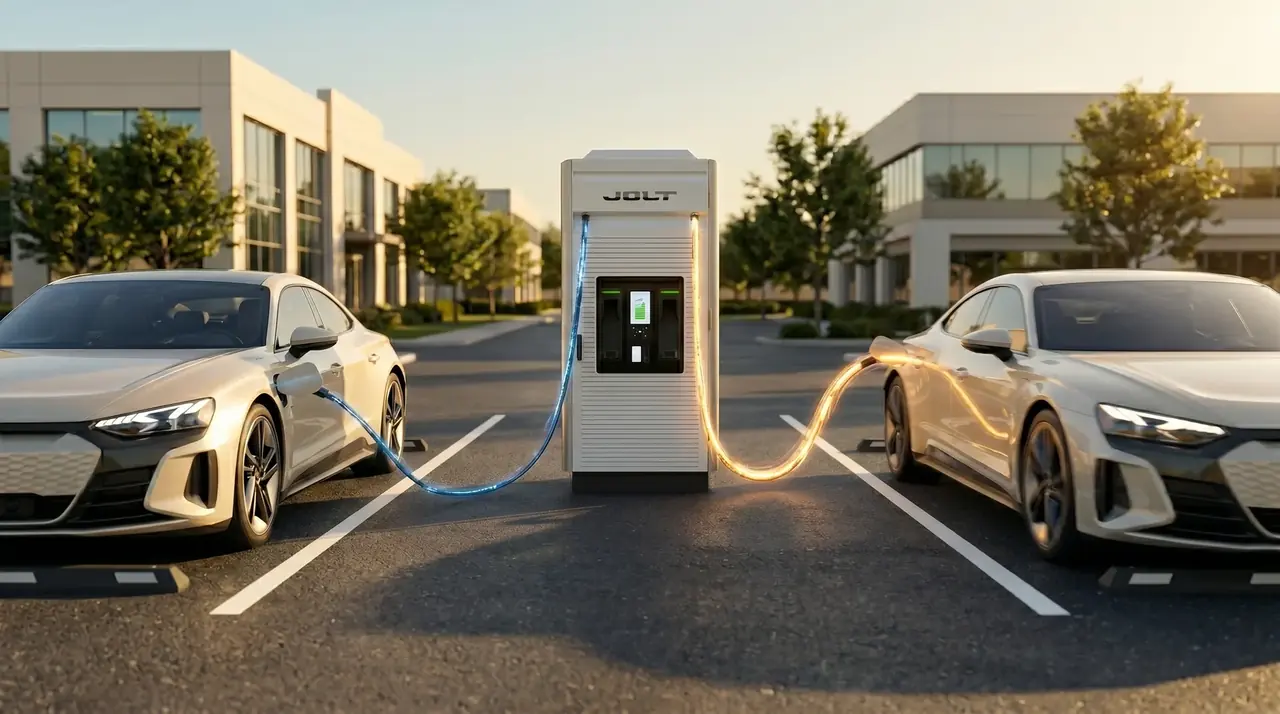
400 volts or 800 volts: why some EVs charge faster
Anyone looking to charge their electric car faster will sooner or later come across the question of 400 versus 800 volts. Both systems serve the same purpose: delivering energy to the battery. The difference lies in how efficiently electricity can be transferred. That is precisely what affects an EV's charging speed and explains why some models charge much faster than others at a fast charger.
What 400 volts and 800 volts mean for an EV
A 400-volt EV and an 800-volt EV differ above all in their electrical architecture. Put simply, voltage describes the level at which energy is handled inside the vehicle. The higher the voltage, the less current is needed for the same power. That sounds technical, but it has a clear everyday benefit: Charging technology can work more efficiently because cables and components are under less strain at higher voltages.
For drivers, this does not automatically mean that an 800-volt system is always better. A modern 400-volt system can also be highly practical for everyday use. What matters is how well the vehicle, battery and charging system work together.
Why an 800-volt EV often charges faster
The big advantage of an 800-volt electric car becomes apparent during fast charging. The higher voltage allows more energy to be transferred at the same current. This increases the potential charging power and, in the best case, reduces charging time. That is precisely why the difference between 400- and 800-volt models is often particularly clear at high-power fast-charging stations.
In practice, this means that an 800-volt vehicle can draw particularly high power from compatible fast chargers. That is especially attractive on long journeys, when a difference of just a few minutes really matters. Drivers who frequently charge on the road therefore often benefit more from this technology than those who mainly charge at home.
Why charging speed depends on more than voltage
Even so, it would be too simple to look only at 400 or 800 volts. An EV's charging speed also depends on its battery, temperature management and charging curve. Even an 800-volt model does not charge at maximum power all the time. As the battery fills up, charging power drops again in many vehicles.
A well-designed 400-volt electric car can therefore also perform well in everyday use. If the battery preconditions quickly, fast-charging capability is high and the car sustains its power output for a long time, short charging stops are realistic too. In the end, what matters to users is not just the peak figure on the specification sheet but how much range they can actually add in 10 or 15 minutes.
The role of High Power Charging
This becomes especially relevant with HPC charging. High-power charging means charging at particularly powerful DC stations that provide high power for short stops. This is where an 800-volt system can really show its strengths, as it can transfer high charging power efficiently. Without a suitable charging point, however, even the best vehicle architecture offers little benefit.
This is precisely why capable charging infrastructure is so important. At JOLT, we bring fast charging stations into urban areas, enabling ultra-fast charging where people need it in daily life. With charging power of up to 360 kW, you can add up to 100 km of range in five minutes.
Which charging technology suits the way you drive?
Whether 400 or 800 volts suits you better depends primarily on how you use your EV day to day. For many people, a 400-volt EV is entirely sufficient, particularly if they mostly drive in the city or generally charge overnight. By contrast, people who frequently cover long distances and want to recharge as quickly and efficiently as possible on the road often benefit more from an 800-volt EV.
Ultimately, the voltage alone is not what matters. If you want to charge your electric car faster, you should always look at how the charging technology, charging power, charging curve and charging infrastructure work together. Only in everyday use does the true size of the advantage become apparent.
Ultra-fast charging
Find a JOLT station near you
Up to 360 kW – in the middle of the city, around the clock.
Find a charging station