
Many drivers know the rule of thumb from combustion engines: stop-and-go traffic in the city centre burns the most fuel, while the motorway is where you drive most economically. With an electric car, the opposite is often true. Once you understand where your EV’s consumption really comes from, you can plan range, costs and charging stops far more precisely.
That is exactly what we take a fact-based look at in this article!
Two physical factors determine how much energy an electric car needs per 100 kilometres. The first is aerodynamic drag. It rises with the square of your speed, and the power required to overcome it rises with the cube. Double your speed, and you need roughly eight times the power, simply to push the air aside.
The second factor is recuperation. When you brake, the electric motor converts kinetic energy back into electricity and feeds it into the battery. Combustion engines have nothing like this energy recovery, and it explains why frequent braking and accelerating harm your consumption far less than you might expect.
In urban settings, the electric car plays to its strengths. Low speeds keep aerodynamic drag small, and every braking moment at a traffic light or junction tops the battery back up a little. As a result, consumption in the city is often at its lowest, typically in the range of around 13 to 16 kWh per 100 kilometres.
Keep one exception in mind: in winter, heating and air conditioning weigh more heavily on consumption, because at low speeds they make up a larger share of total demand. Even so, the city remains the most economical environment for most models.
On a country road, you move within the ideal window. At a steady 70 to 100 km/h, aerodynamic drag stays moderate while the energy-sapping constant acceleration of city traffic falls away. An EV’s consumption on a country road therefore often sits only just above the city figure, at around 15 to 18 kWh per 100 kilometres.
Drive with foresight and keep your speed even, and you will get the best range out of a single charge here. That is precisely why the country road is the quiet efficiency champion among the three route types.
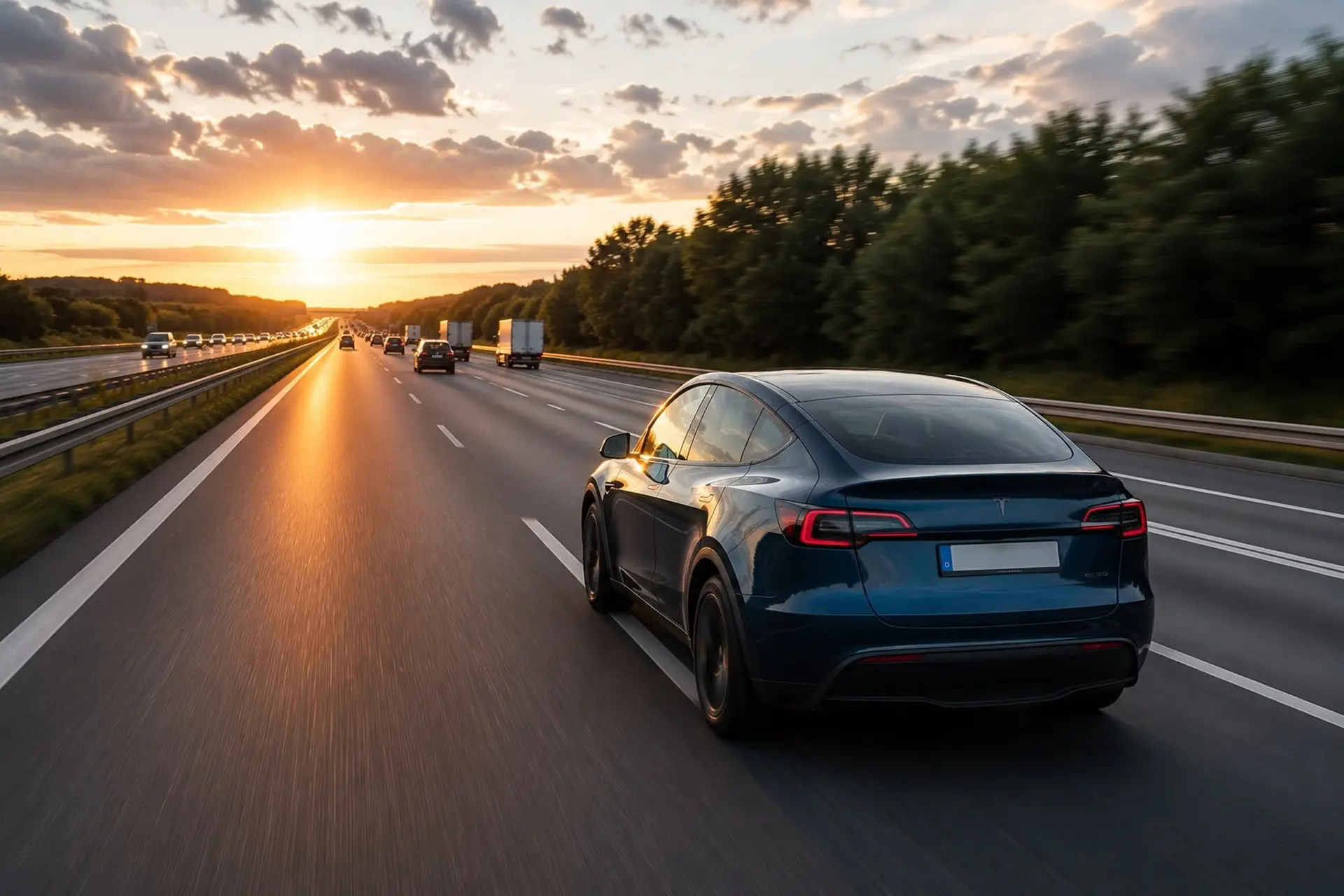
On the motorway, the familiar picture is reversed. High sustained speeds send aerodynamic drag soaring, and recuperation barely happens because you rarely brake. As a consequence, an EV’s consumption on the motorway climbs steeply, reaching around 20 to 30 kWh per 100 kilometres at 130 km/h and above.
This answers our opening question clearly: an electric car uses the most energy on the motorway. Travel at 150 km/h, and you can almost double your electricity consumption compared with the city, noticeably shortening your range.
The overview below summarises the typical reference values (depending on model, weather and driving style):
The order is unmistakable: an EV’s consumption on the motorway clearly exceeds the country road and the city, while the city costs the least energy.
These figures bring you a direct everyday benefit. If you spend a lot of time in the city, you will get surprisingly far on a single charge and save real money. If, on the other hand, you are planning a longer trip with a high share of motorway driving, factor in the higher motorway consumption from the start and plan your charging stops accordingly.
Three practical tips will noticeably lower your consumption:
This is exactly where JOLT supports you as a charge point operator. With ultra-fast charging solutions, we bring up to 320 kW of charging power right into the city centre and charge your vehicle for up to 200 kilometres in around 10 minutes. That way, the charging stop slots seamlessly into your day:
In this way, you turn your knowledge of EV consumption into more range, less stress and lower costs.
Unlike a combustion engine, an electric car uses the least energy in the city and the most on the motorway, with the country road sitting in between. Aerodynamic drag and recuperation are responsible. For you as a driver, this means that with the right driving style and reliable charging points, you keep range and costs firmly under control. Would you like to top up with ease while you are out and about and never worry about EV consumption again?
Discover the ultra-fast charging network from JOLT today and find a charging station near you!
You are a journalist and want to reach our team? You want to sign up for press distribution list?
You need our press kit and brand assets? here is everything your might need.