
Charging an EV without a Wallbox: How Battery-Buffered Charging Works
Learn how battery-buffered charging works and why ultra-fast charging stations are so practical in urban areas.
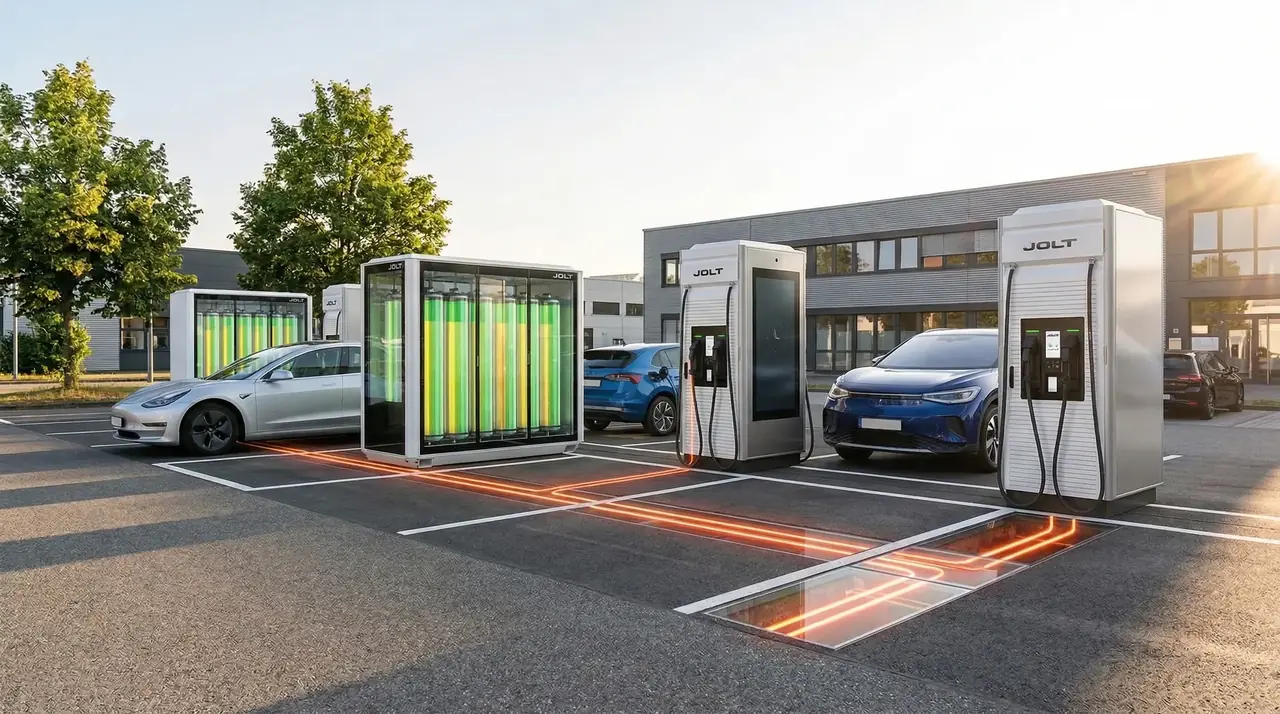
Not everyone has a dedicated parking space, a garage or the option of installing their own charger. Even so, electric mobility remains practical for everyday life. If you want to charge your electric car without a wallbox, what you need above all is a flexible, reliable solution that is as easy to use as possible. This is where modern fast charging stations come in: they work independently of conventional home charging and play a particularly important role in urban areas.
Why you can charge without a private charging station
Many people already drive an EV without having a charging station of their own at home. This has long been a reality, especially in densely built-up urban areas, rented homes and apartment buildings. What matters is not whether electricity is available right where you live, but whether charging can be reliably integrated into your daily routine.
If you cleverly combine charging with shopping, business appointments or your commute, you can stay mobile without a private charging facility. An electric car without its own charging station does not automatically mean restrictions: with the right charging solution, it remains flexible and convenient to use.
How battery-buffered charging works in practice
The essence of this model is storing energy temporarily. With battery-buffered charging, high-power electricity is not drawn from the grid only when a car plugs in. Instead, an integrated battery charges over a longer period. When a car arrives at the station, the battery delivers its stored energy to the vehicle at high power. This is precisely what makes fast charging possible at sites where the grid cannot support conventional high-power infrastructure. It offers more flexibility in choosing locations and makes it easier to expand charging infrastructure where quick solutions are needed.
Alternatives to a wallbox at home
If you're looking for an alternative to a home wallbox, consider public AC and DC charging points, workplace charging options and battery-supported fast chargers in the city.
Many people wonder whether they can charge an EV from a three-phase power outlet without a wallbox. While this is technically possible in some cases, it is generally neither the most convenient nor the safest everyday solution. Public charging facilities that are ready to use immediately and require no installation of your own are much more practical. For people without a permanent charging point at home, availability, speed and easy payment matter far more than a complicated stopgap solution.
The practical benefits of battery storage
The real benefit lies in separating charging power from the grid connection. A charger can draw power steadily from the grid to fill its storage battery and later deliver that energy to vehicles in a concentrated burst. This eases the burden on local infrastructure and makes deployment at many sites easier. For users, above all, it means shorter charging times in places where fast charging would otherwise be hard to implement. Particularly in areas with limited grid capacity, this creates a practical model that closes gaps in coverage and makes electric mobility more accessible.
How JOLT uses battery-buffered charging
JOLT uses fast-charging solutions with integrated battery storage to install charging points even where conditions are not ideal for conventional high-power charging sites. This can make expansion at inner-city locations easier and help provide additional charging options.
Ultra-fast charging
Find a JOLT station near you
Up to 360 kW – in the middle of the city, around the clock.
Find a charging station