
What’s the Difference Between AC, DC, and Ultra-Fast Charging?
EV charging may seem complicated to newcomers who have zero experience with this new generation of “greener” cars. Firstly, you should learn that AC charging is the most popular and cheapest method at the moment, but it takes the longest time to charge your car.
Did you know that every time you charge an electronic device, such as your smartphone, the plug converts alternating current into direct current? What does that mean for electric vehicles (EVs)? AC stands for alternating current and DC for direct current. These are the two types of 'fuel' that can power electric vehicles.
AC chargers provide charging power of up to 22 kW. They are best suited to charging cars for several hours or even overnight. In general, charging power and charging time also depend on the model of vehicle being charged.
DC chargers start at 50 kW and currently go up to 350 kW. For example, you can add 100 km of range in around 30 minutes.
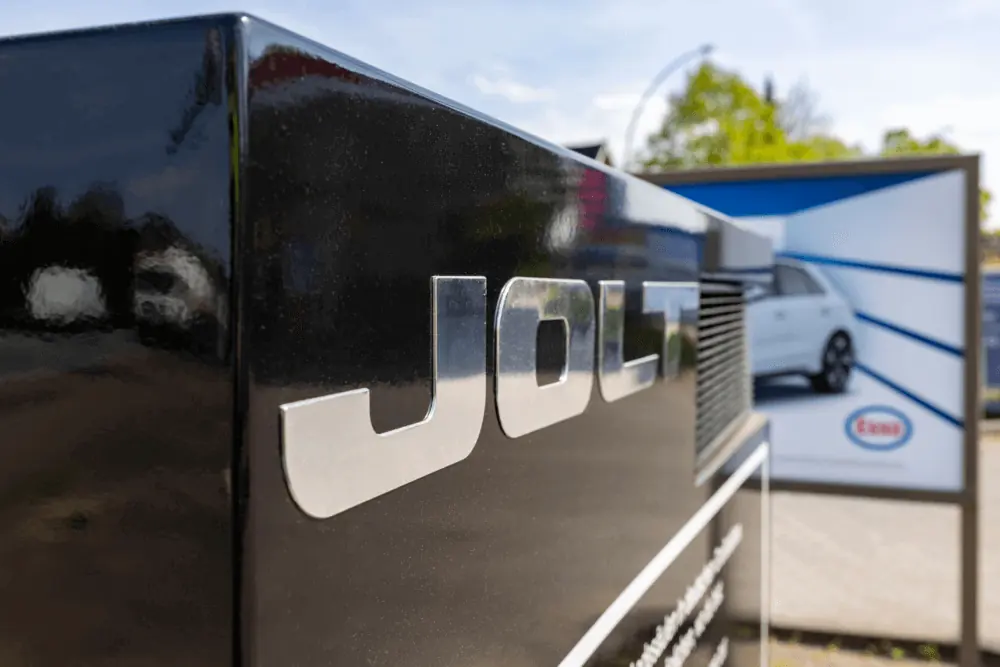
And what is ultra-fast charging? Anything at or above 150 kW. With JOLT chargers, you can add the next 100 km of range in 5 minutes — six times faster. Let's take a closer look.
Key differences between AC, DC and ultra-fast charging
Charging electric cars may seem complicated to newcomers who have no experience with this new generation of 'green' cars. First, you should know that AC charging is currently the most popular and cheapest method, but it takes the longest to charge your car. Ultra-fast charging is definitely the quickest and most effective way to get your vehicle ready for a long journey. However, it will cost you much more.
AC charging for electric cars
Alternating current is what always comes from the grid and what most chargers use today. Electric car batteries, however, can only store direct current, so the car has to convert the electricity. Most electronic devices have a converter built into the plug. This is why charging an electric vehicle this way takes longer and is generally more economical. It is currently the most common way to charge electric vehicles. A typical charging power is 22 kW, making it ideal for charging at home or work, where more time is available.
Note, however, that every onboard charger has a maximum capacity, which depends on the vehicle and the power available from the charging infrastructure.
DC charging for electric vehicles
The main difference between AC and DC charging is where AC electricity is converted. AC chargers require an external DC converter, while DC chargers have a converter built into the charger itself. This means DC charging does not need an onboard charger to convert the electricity.
Although AC charging is more common, a DC charger offers more advantages: It is faster and supplies power directly to the vehicle battery. This approach is common near motorways or at public charging stations, where you have only limited time to charge.
Why ultra-fast charging is best
With ultra-fast charging, charging power is generally above 150 kW – around five times faster than AC and standard DC chargers. One of the most important benefits of ultra-fast charging is that it leaves room for upgrades: the chargers are often modular, so they can be expanded as demand grows. The number of vehicle models capable of accepting higher power is expected to increase in the near future.
The biggest advantage of ultra-fast charging is undoubtedly the time saved: charging to 80% is expected to take less than 15 minutes. Our chargers, for example, need just 5 minutes to provide your car with enough energy for the next 100 km.
Ultra-fast charging
Find a JOLT station near you
Up to 360 kW – in the middle of the city, around the clock.
Find a charging station