
EV with a Caravan or Trailer: How to Plan Range and Charging
Heading off on holiday with a caravan or using a trailer for your next transport job is entirely possible with an electric vehicle. However, the additional weight and increased aerodynamic drag change how the vehicle performs. Anyone travelling with an EV and caravan should therefore check the permitted vehicle limits and plan charging stops and routes more carefully.
Can every electric vehicle tow a caravan?
Whether you can tow a caravan with an EV depends on the vehicle’s approved towing capacity. This specifies the maximum weight of a braked or unbraked trailer that the vehicle is permitted to tow. You can find the relevant figures in the vehicle documents and the manufacturer’s technical specifications.
You should also consider the maximum authorised mass, nose weight and actual load. Not every electric vehicle is automatically suitable for towing a large caravan. Lighter models and modern EVs with strong torque often provide better conditions. However, the officially approved vehicle and trailer combination is always the deciding factor.
Why does range decrease when towing a trailer?
An EV with a trailer requires more energy than the same vehicle travelling without an additional load. A tall caravan in particular creates a larger surface area for the wind to act on. This increases aerodynamic drag, especially at higher speeds.
The additional weight also affects energy consumption, particularly during acceleration and when driving uphill. Other factors such as headwinds, low temperatures, wet roads and a fully loaded vehicle can increase electricity consumption even further. The vehicle’s usual range therefore cannot be applied directly to an EV towing combination.
The actual reduction in range depends on the vehicle, trailer, driving style and route profile. On your first few journeys, allow for a generous reserve and keep an eye on the displayed average energy consumption.
How to reduce electricity consumption on the road
Driving at a steady pace helps limit energy use. Accelerate smoothly and anticipate traffic conditions, avoid unnecessary changes in speed and maintain a moderate cruising speed. Even small differences in speed can have a noticeable effect on consumption because of the increased aerodynamic drag.
You should also check the tyre pressure of both the towing vehicle and the trailer. Remove unnecessary luggage and distribute the load safely. Regenerative braking can recover some energy on downhill sections, but it cannot fully offset the additional electricity required to tow a trailer.
Charging an EV with a caravan and planning stops
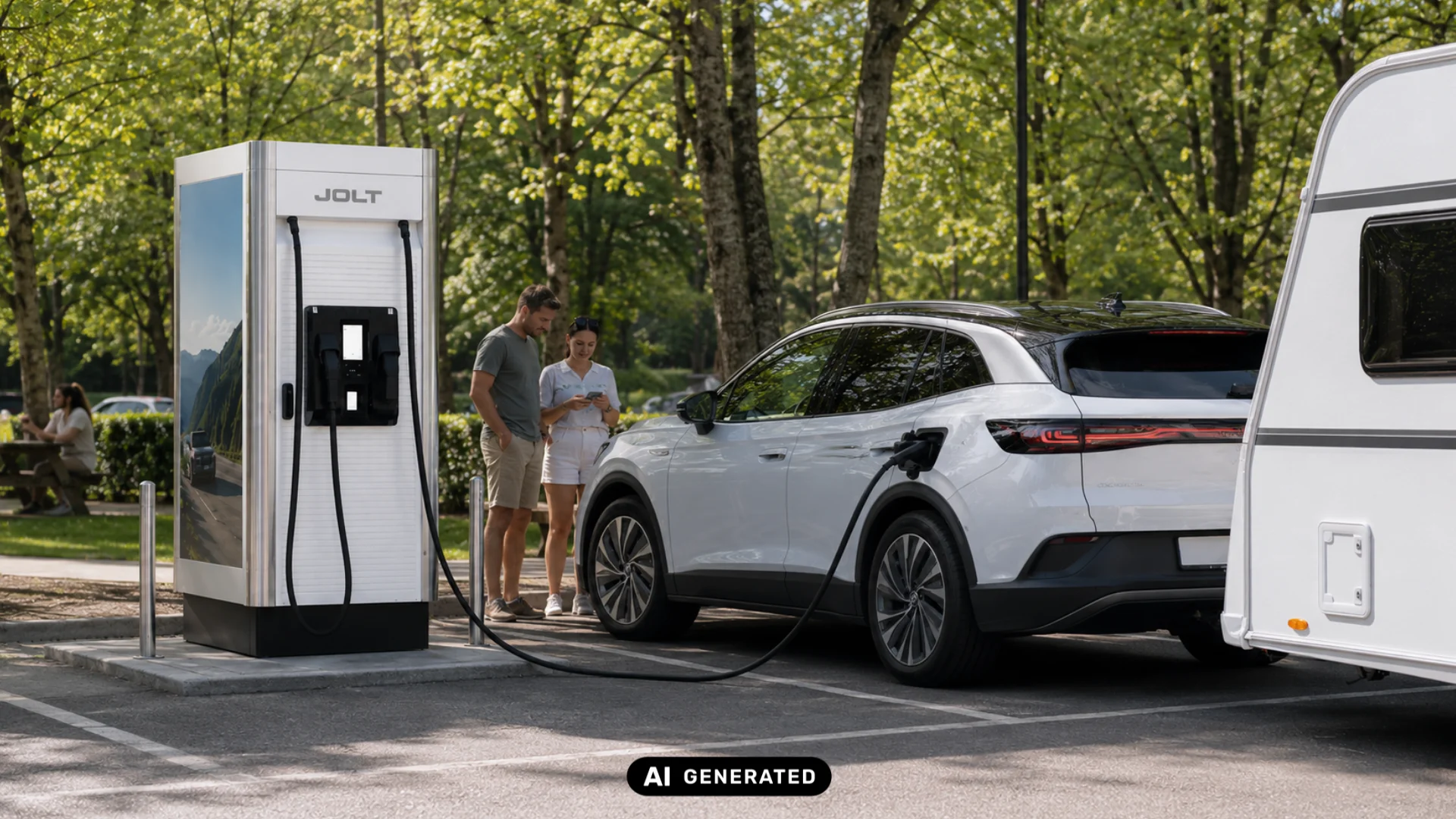
When charging an EV with a caravan, charging speed is not the only factor to consider. The amount of space available at the charging station is equally important. Many charging bays are designed for individual passenger cars, which means you may need to unhitch the trailer before charging.
A suitable route planner can help you find charging stops along the way and estimate your battery level on arrival. Plan shorter stages than usual and choose locations with enough space for manoeuvring wherever possible. Photos, reviews and up-to-date site information can make preparation easier.
JOLT’s fast-charging stations also allow you to add useful range in a short amount of time. When travelling with a long vehicle and trailer combination, check in advance whether the individual location is easily accessible.
Reach your destination comfortably with the right preparation
Travelling with an EV and caravan requires a little more planning, but it does not fundamentally limit your freedom to travel. Check the towing capacity before setting off, allow for sufficient energy reserves and identify suitable charging stations in advance. With a steady driving style, realistic stages and flexible charging breaks, journeys with a caravan or trailer can remain comfortable and predictable.
Ultra-fast charging
Find a JOLT station near you
Up to 360 kW – in the middle of the city, around the clock.
Find a charging station